Content on this page requires a newer version of Adobe Flash Player.

Get Adobe Flash player

• Acne

• Aging

• Fat and Cellulite Reduction

• Hair Loss

• Hand, Foot and Nail

• Lashes

• Healthy Skin Support and Maintenance

• Laser Hair Removal

• Leg Vein Reduction

• Lip and Eye

• Loss of Facial Volume

• Massage, Body Care and Maintenance

• Mole and Skin Tag Removal

• Pigmented Lesion (Brown Spots)

• Pre-Cancerous Lesion

• Rosacea, Redness and Facial Spider Veins

• Scars

• Stretch Marks

• Tattoo Removal

• Under Eye Circle

• Wrinkle and Furrow


SEARCH
 

Why are laser treatments at SKIN MediSpa superior to other available options?

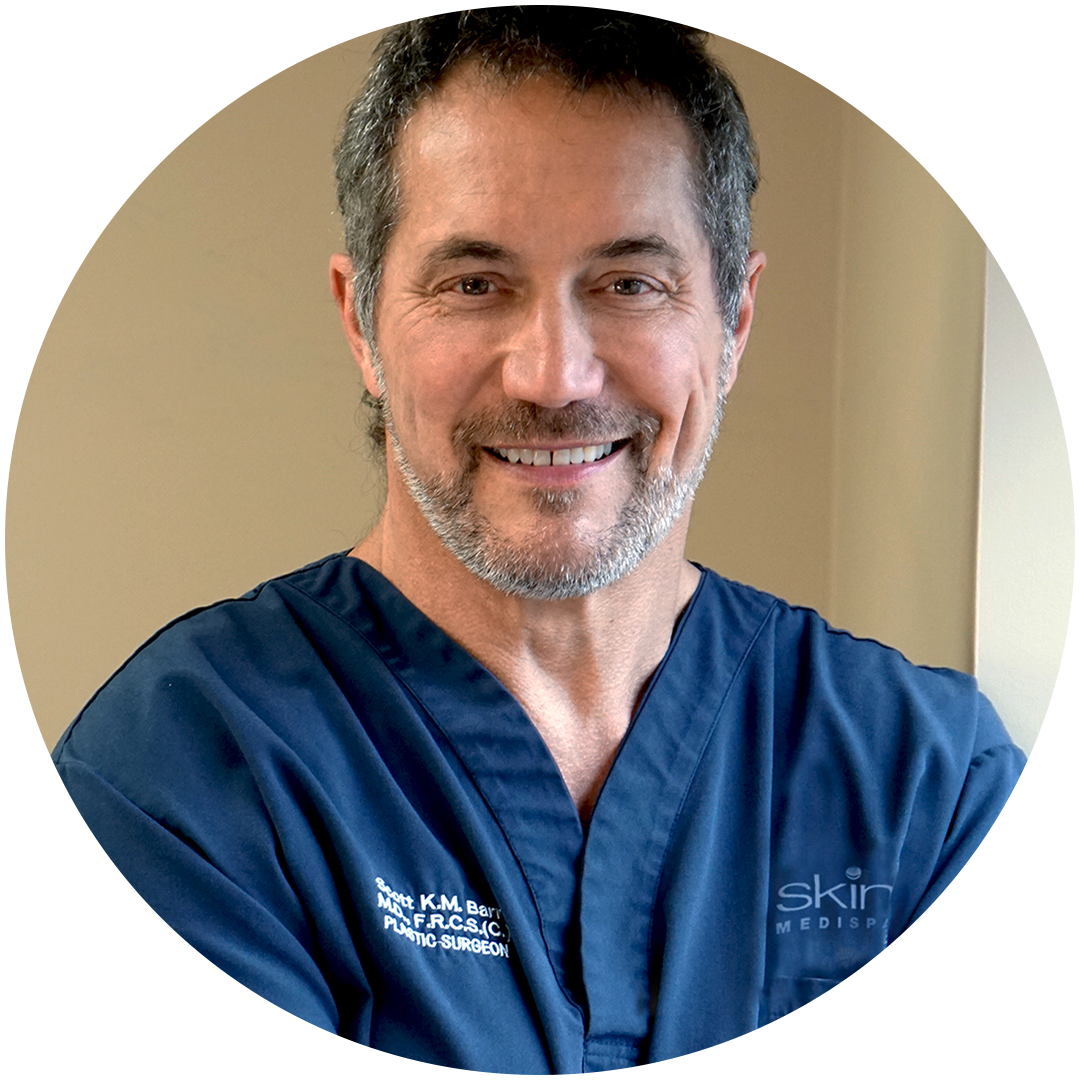
Our consultant, Dr. Scott Barr, and his team of aesthetic professionals have performed literally thousands of successful laser treatments over the past decade.

Laser, pulsed light and radio frequency energies can therefore be combined and alternated to ensure maximum permanent hair removal. All of our laser programs are supervised by Dr. Scott Barr, who speaks regularly across North America on laser and radio frequency technologies and their application to aesthetics. Each client's individual skin and hair characteristics are assessed in order to choose the most appropriate laser system to optimize each client's result. The recent addition of newer laser technology and radio frequency energy systems to hair removal treatments has allowed treatments to be performed on darker skinned individuals and patients with grey, blond or red hair.

What Is The Physiology Behind Laser Hair Removal?

All hair shafts move through a cycle of active growth (anagen), transition (catagen), and resting (telogen) phases. The length of hair at different body sites is governed by the duration of the anagen phase. Duration of telogen also varies with body site, and may be as long as one year on the leg. Short to medium term hair loss is achieved by inducing the telogen phase, which is the mechanism for the reliable and complete loss of pigmented hair for several weeks or months after each treatment. Since only hair in the anagen (growth) phase can be effectively disabled, several treatment sessions are required to ensure that the hair follicles are treated when they are in the anagen stage. Depending on location and individual follicular response the frequency and number of treatments required will vary considerably. There are three distinct responses which account for the success of laser hair removal treatments:

  1. Miniaturization of hair follicles
  2. Decreased pigmentation of regrowing hair
  3. Degeneration or disabling of hair follicles

Repeat treatment sessions should be scheduled when a significant number of hairs are growing, which ensures that the hairs are being treated as they enter the anagen phase. The legs, areola, chest and back experience long telogen (resting) phases and usually require retreatment in six to twelve weeks. Other areas such as the face, armpits and bikini line have shorter telogen phases and require retreatment in four to eight weeks. Although some patients have seen dramatic responses in only a few treatments, typically after five to ten treatments, prolonged hair loss is maintained and enduring.

Who Operates The Laser?

Laser Hair Removal treatments are performed within our fully accredited facility by registered nurses or certified laser technicians who are thoroughly trained to perform safe and effective laser treatments.

What do the Treatments Feel Like?

The laser is quite comfortable and no anesthetic creams are needed. Most individuals experience no more than a slight stinging sensation as the laser pulses are delivered. Dark, coarse hair (such as the hair in the bikini line area) absorbs more energy and slightly more stinging is experienced. However, the laser is far more comfortable than alternatives such as waxing, sugaring, or electrolysis. In the event that a patient finds this stinging uncomfortable, they will be given a topical anaesthetic gel, which is only available though physicians' offices, to apply to the area to be treated. Patients can relax for twenty minutes in one of our private waiting areas while the gel takes effect.

Can All Hair Colours and Parts of the Body be Treated?

Laser hair removal is possible on all parts of the body except the eye area. The upper lip, chin, cheeks, forehead, neck, chest, abdomen, buttocks, back, shoulders, forearms, hands, fingers, areola, bikini line, thighs, lower legs, feet, and toes can all be treated.

What Will the Treated Area Feel or Look Like After Treatment?

Immediately after the treatment, the area may be slightly red and puffy. This reaction subsides quickly and patients can return to normal activities immediately after the treatment session. Most of the hair shafts will remain intact immediately following the treatment, although many will appear to be singed and curled. Over the following two to three weeks, the hair will gradually be extruded which may appear to some patients as hair growth. It is important to understand that the extrusion process is a normal and integral part of the long term hair removal process. During the extrusion period, the hair loss can be facilitated by gentle rubbing. Patients can wax or shave the hairs as they are being extruded, as this will not adversely affect the result. The treated area must be protected from the sun for one week, after which a normal skin protection (sunscreens) should be used for two months. Due to the high level of pigment present in freckles, sunspots and other pigmented lesions, they may be permanently lightened or removed following the treatment.

Long Term Results

Results of laser hair removal treatments depend on many factors such as colour of the hair, exposure to the sun, energy level that can be safely used, and coarseness of the hair. After each treatment, most patients experience up to 30% reduction in hair growth of the follicles that were in the anagen phase after each treatment session. The number of treatments required to achieve optimal results is based on individual patient characteristics including the specific area being treated, the colour and coarseness of the hair and the patient's skin type. However, clinical results to date suggest that the majority of patients will require five to ten treatments to achieve significant permanent reduction. All patients will require a minimum of 5 treatments, separated by approximately 6 weeks, to target hairs that might have been in the sleeping phase (telogen) at the time of the first treatment. After laser treatments, some patients notice a dramatic reduction in the number of hairs that don't grow back and a long delay before those hairs that were not disabled to return. Permanent reduction of up to 90% can be achieved. The hairs which grow back are usually much lighter in colour and finer in thickness. Most patients notice that the maximum number of hairs which are permanently destroyed occurs after the 4th or 5th treatment, however some clients will require more.

Who is a Candidate For Permanent Hair Reduction?

Women/Men over 18 years of age (those younger must be accompanied by a parent), who have unwanted face or body hair. Best candidates are light-skinned individuals with dark hair.